
Kingdom Fall: Zombie Defense
LeyiGamesStrategy
4.4446.00 Reviews
- Version
- 1.2.3
- Installs
- 100.00K
- Age Rating
- Teen
Screenshots
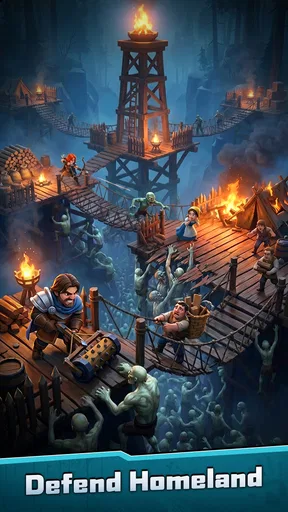
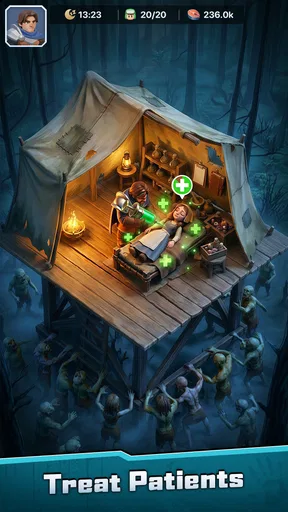
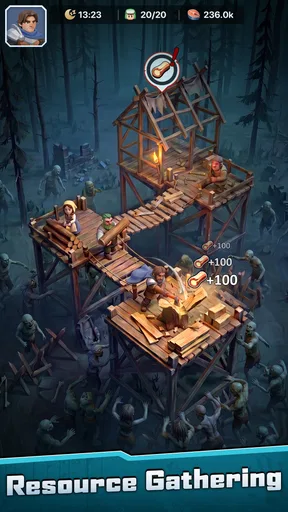
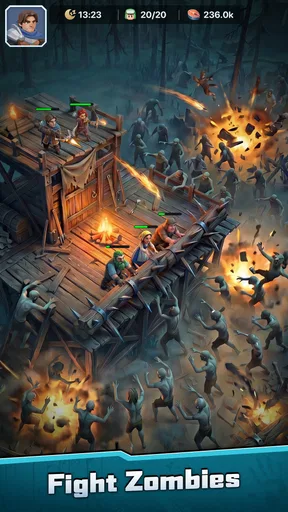
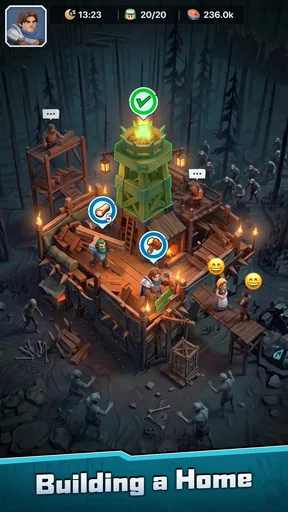
Our Review of Kingdom Fall: Zombie Defense
 Analysis by Appyee
I spent my first sessions with Kingdom Fall: Zombie Defense trying to understand what kind of strategy game it wanted to be. The premise is immediate: a kingdom has collapsed, and I am left making decisions from the ruins while facing a zombie threat. That setup gives the game a darker tone than a cheerful base-builder, but the real test is not whether the opening is attractive. It is whether the decisions remain interesting once the first burst of curiosity has gone.
My early impression was positive. This is a free strategy game from LeyiGames, aimed at players who enjoy rebuilding, defending, and gradually improving their position rather than winning everything in a single sitting. It is rated Teen, so I would not treat it as a young children’s game, especially if you are choosing something for a family tablet. The title is available for Android devices running at least version 7.0, and its current version is 1.2.3.
What makes the game worth examining is the tension between its accessible starting point and the pressure that comes with a free-to-play structure. You can begin without paying, but optional purchases range from $0.99 to $99.99 per item. That does not automatically make the experience unfair, yet it does change how I judge its pacing. A good strategy game should make planning feel rewarding; it should not make every delay feel like an invitation to spend.
From the first week to the question of staying power
I judge a game’s staying power less by how compelling its opening feels than by whether I still have a meaningful choice to make after the routine settles in. Here, I’d keep an eye on whether short visits continue to feel like planning rather than upkeep, and whether I can leave without feeling pushed to return. That distinction leads naturally to the bigger question: what makes a return worthwhile over time?
The opening is easy to understand, but not mindless
The first-week appeal comes from having a clear problem to solve. My attention was pulled toward the practical questions that make this genre work: what deserves attention first, how much can I safely commit to a defense, and whether a short-term improvement will help more than saving for a larger one. Even without relying on complicated terminology, the ruined-kingdom setting gives those choices a reason to exist.
I like that the concept naturally supports short visits. I can check the state of my settlement, decide what needs attention, and leave without feeling that I must spend an entire evening inside the game. That makes it a sensible companion for a commute, a lunch break, or the few minutes before bed. The drawback is that this same structure can make the early routine feel familiar quickly if you are looking for a deep, constantly changing campaign.
For a new player, my advice is to resist the urge to improve everything at once. In a survival strategy game, scattered progress often feels productive while producing a fragile position. I found it more useful to identify the immediate threat, strengthen the part of the kingdom that answers it, and only then consider broader upgrades. This is one of the first non-obvious lessons here: the best early decision is often the one that protects future choices, not the one that looks strongest immediately.
Who will enjoy the first sessions
Kingdom Fall suits players who like watching a damaged situation become manageable. If you enjoy arranging priorities, waiting for progress, and making a few deliberate decisions rather than controlling every second of combat, the opening should feel comfortable. It is also a reasonable entry point for someone who wants to try strategy games without starting with a dense simulation full of menus and specialist vocabulary.
I would be more cautious if your favorite games are fast competitive matches, story-heavy adventures, or tactical battles where every unit can be moved with precision. The zombie theme may suggest constant action, but the lasting appeal is more about preparation and recovery than nonstop reaction. Players who want a fully self-contained premium experience may also find the free-to-play framing less appealing.
The game has reached over 100K installs and carries a 4.4 average from around 16K ratings, which suggests that the basic formula has connected with a meaningful audience. I do not read those figures as proof that it will suit everyone. They tell me that the initial loop is understandable and attractive to many players, but long-term satisfaction depends on how comfortable each person is with repetition, waiting, and optional spending.
A realistic everyday session
Imagine opening the game during a short break after work. You have enough time to review the kingdom, notice that one defensive need is more urgent than another, and make a focused adjustment. You do not have time to explore every screen or chase every reward. In that situation, the game works best when you treat the session as a small planning exercise rather than trying to complete everything available.
That habit also protects the experience from becoming a chore. I would choose one objective before opening the app: stabilize a weak point, prepare for the next challenge, or save toward a meaningful improvement. Once that task is done, I would leave. This sounds simple, but it is a useful way to prevent free strategy games from turning a five-minute break into an unplanned series of check-ins.
What changes after the novelty fades
The first week is carried by discovery. I am learning the rhythm, testing priorities, and seeing whether the kingdom’s collapse creates decisions that feel different from one another. By the second or third week, that discovery becomes a routine. The important question then becomes whether the routine still gives me a reason to think.
In my experience, the game’s recurring value depends less on the zombie theme itself and more on the quality of its small trade-offs. If I am still deciding between immediate safety and long-term growth, the loop has life. If I am only repeating the same safe sequence, the atmosphere cannot carry the game forever. This is where the title needs to earn its place on a phone rather than simply occupy it because the opening was enjoyable.
I would approach the monthly experience with a personal rule: do not measure progress by how often you open the game. Measure it by whether each visit produces a decision you actually care about. That distinction matters. A game can encourage frequent maintenance without offering meaningful strategy, while a slower game can remain satisfying if each return asks me to reconsider my plan.
How it compares with familiar alternatives
Compared with a traditional tower-defense game, this experience is better suited to players who want the kingdom around the defense to matter. A pure tower-defense title usually gives me a clearly bounded encounter and asks me to solve it through placement and timing. Kingdom Fall feels more appropriate when I want the broader pressure of rebuilding and managing an unstable position.
Compared with a large-scale empire builder, it is easier to approach. I do not need to begin with the expectation of managing a sprawling political system or learning an intimidating web of alliances. The zombie setting keeps the goal more immediate: survive, recover, and strengthen the remaining kingdom. The trade-off is that players seeking elaborate diplomacy, a highly social world, or a grand strategic map may prefer a more expansive alternative.
It also differs from a premium strategy game in a practical way. A paid game generally asks for money at the beginning and then lets me judge its systems without the same concern about purchase prompts. Here, the free entry is attractive, but I need to keep an eye on whether convenience starts competing with planning. Because purchases can reach $99.99 per item, I would set a personal spending limit before becoming invested, especially if I am prone to paying to remove waiting or frustration.
The month-to-month maintenance burden
Maintenance is not necessarily a flaw in this kind of game. I enjoy returning to a living project, checking what has changed, and making a small correction. The burden begins when the game becomes another obligation that I feel guilty for ignoring. For me, the difference is whether returning after a day away feels like an invitation or a penalty.
I found the healthiest approach was to keep the kingdom’s priorities narrow. Instead of trying to respond to every possible need, I would choose a main development goal and let less urgent improvements wait. This creates a useful workflow: assess, prioritize, act, and stop. It also reveals whether the game supports thoughtful play or merely encourages constant attention.
Players wondering whether they must spend every day in the app should think about their own preferred rhythm. If you enjoy regular check-ins, the maintenance loop may feel satisfying. If you prefer games that can be ignored for a week and then resumed with no friction, this may not be the best fit. The more your enjoyment depends on uninterrupted momentum, the more important it is to decide in advance how often you realistically want to play.
Another practical tip is to separate strategic decisions from emotional reactions. A difficult setback can make an instant purchase feel reasonable, but that is usually the worst moment to decide. I would close the game, consider whether the purchase solves a genuine planning problem or only removes temporary discomfort, and return later. That pause is especially important in a free game with optional items priced from $0.99 upward.
Where fatigue can appear
The main source of fatigue is repetition without enough reinterpretation. Rebuilding a fallen kingdom is compelling when every improvement changes what I can safely attempt next. It becomes tiring when I already know the answer before opening the game. The same applies to the zombie theme: danger creates urgency at first, but urgency loses force if it becomes a predictable background signal.
Another possible friction point is the balance between patience and convenience. Waiting can make a successful plan feel earned, yet too much pressure around waiting can shift my attention away from strategy and toward the shop. I would not call optional purchases a reason to reject the game outright, but I would treat them as part of the design rather than an afterthought. Free access is valuable only if I can still enjoy making decisions without feeling pushed toward payment.
There is also a difference between busy play and deep play. A long list of tasks can make a session look full while leaving little room for genuine judgment. I prefer fewer choices with consequences over many routine taps. If you are sensitive to repetitive upkeep, try the game in short, intentional sessions before committing to it as a daily habit. That will tell you more than an enthusiastic first evening.
The Teen rating is another reason to choose the audience carefully. The setting involves a fallen kingdom and zombies, which may be perfectly suitable for older players who enjoy darker fantasy strategy. I would not install it automatically on a child’s device simply because it is free. The age label should be part of the decision, alongside the presence of in-app purchases.
Technical fit and practical expectations
On the platform side, the minimum requirement of Android 7.0 makes the game accessible to a broad range of Android users. That is useful if you are playing on an older device rather than a recent flagship. Still, compatibility is not the same as comfort. A phone that technically runs a game may not be the best place for it if storage, battery life, or screen size already make longer sessions unpleasant.
The current version is 1.2.3, so I would keep the app updated through the normal store process when possible. Strategy games benefit from maintenance because small adjustments can affect pacing and balance, even when the central idea remains unchanged. I would also avoid judging the entire experience from a single early session; the important test is whether the routine remains clear and manageable after the initial learning period.
Does it earn lasting space?
My long-term verdict is cautiously favorable. Kingdom Fall has a strong enough foundation to remain installed for players who enjoy compact strategy sessions, gradual recovery, and the satisfaction of protecting a damaged kingdom. Its best quality is the way the setting gives ordinary planning decisions a sense of urgency. I am not just improving numbers in the abstract; I am trying to keep a precarious world from collapsing again.
That lasting value is conditional. I would recommend it to a friend who likes free strategy games and is comfortable setting boundaries around optional purchases. I would not recommend it to someone who wants a one-time purchase with no monetization pressure, a highly reactive action game, or a strategy title that constantly introduces fresh systems. The game earns repeat visits when I approach it as a focused planning habit, not as an app that must be checked endlessly.
In the end, I think LeyiGames has made a title that is easy to start but more demanding to evaluate honestly. The opening promise is clear, the category is familiar, and the free price lowers the barrier to trying it. The real question is whether the rebuilding decisions continue to feel personal after the ruined-kingdom novelty fades. For me, the answer is yes in measured doses: I would keep it for short, purposeful sessions, watch my tolerance for repetition, and spend nothing unless the basic loop already feels satisfying on its own.
That is the standard I would use before downloading Kingdom Fall: Zombie Defense: can I enjoy planning the next step without needing constant rewards or purchases to make the visit worthwhile? If the answer is yes, this strategy game has enough recurring value to deserve a place in a rotation. If the answer is no, a premium strategy game or a more direct tower-defense alternative will probably serve you better.
Verdict
Strengths of Kingdom Fall: Zombie Defense
- Simple controls make it easy to start playing quickly.
- Short battles fit well into brief gaming sessions.
- Tower placement adds meaningful tactical decisions.
- Zombie designs and effects give the game a lively atmosphere.
- Progression rewards regular play with new defensive options.
Limitations of Kingdom Fall: Zombie Defense
- Some stages can feel repetitive after extended play.
- Difficulty may increase sharply in later levels.
- Upgrade costs can slow progress without frequent play.
- The interface may feel crowded on smaller phone screens.
- Performance can vary on older devices during busy battles.
Other Releases by LeyiGames
View All


Similar Picks in This Category
View All
Clash of Clans
Supercell4.5

Plants vs. Zombies™
ELECTRONIC ARTS3.7

Lords Mobile: Kingdom Wars
IGG.COM4.5

Clash Royale
Supercell4.4

State.io — Conquer the World
CASUAL AZUR GAMES4.1

Car Driving School : Car Games
Spark Game Studios3.9
Frequently Asked Questions
What is Kingdom Fall: Zombie Defense?
Kingdom Fall: Zombie Defense is a strategy defense game that combines medieval kingdom management with zombie survival. You build and protect your stronghold, deploy defenders, improve your heroes, and fight increasingly dangerous waves of undead enemies. The game focuses on planning rather than constant tapping, so choosing the right units, upgrading them carefully, and using abilities at the correct moment can make a major difference during difficult battles.
How does the gameplay work in Kingdom Fall: Zombie Defense?
The main gameplay revolves around defending your territory from approaching zombie waves. Before and during each battle, you typically position available defenders, select suitable heroes, and use special skills to stop enemies from reaching the objective. Different enemy types may require different tactics, while stronger stages test your formation, upgrade choices, and timing. Progress usually comes from completing missions, earning resources, and improving your defense over time.
Is Kingdom Fall: Zombie Defense free to download and play?
Kingdom Fall: Zombie Defense can generally be downloaded without an upfront purchase, but players should expect optional in-app purchases. These may provide extra resources, speed up upgrades, unlock useful items, or offer special bundles. It is possible to make progress without spending money, although free players may need more patience when waiting for upgrades or repeating stages. Check the store listing for current pricing and purchase details.
Does the game require an internet connection?
Internet requirements can vary depending on the version and the feature you are using. Basic campaign battles may be available with limited connectivity in some builds, but online access can still be needed for advertisements, cloud saves, events, account synchronization, updates, and in-app purchases. If you plan to play while traveling, it is best to test the game offline first and avoid assuming that every feature will work without an active connection.
Is Kingdom Fall: Zombie Defense suitable for all players?
The game is a reasonable choice for players who enjoy tower defense, hero upgrades, medieval settings, and zombie-themed action. It may not appeal to everyone because progression can become more demanding, battles may encourage repeated play, and optional purchases or advertisements can affect the experience. Parents should also review the age rating and store description, since the game includes fantasy violence and undead enemies. Device compatibility should be checked before downloading.
Play our best games!


